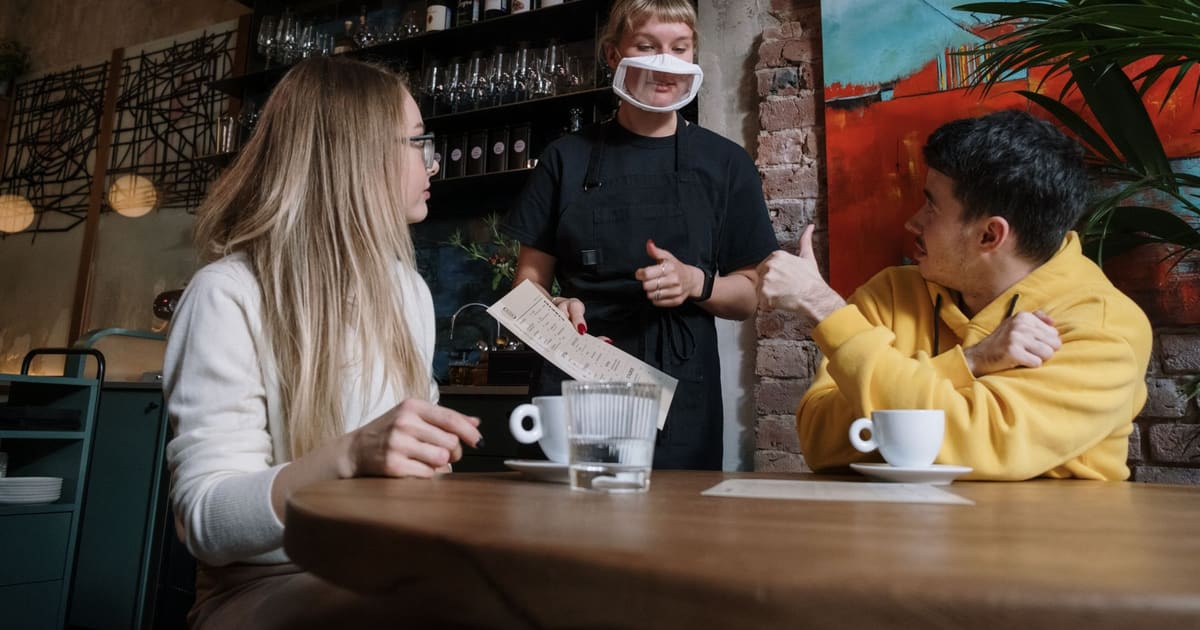
A group dinner at a restaurant works smoothly when three things are in place before anyone sits down: the right venue for the guest count, a reservation that flags the group size, and a plan for how the bill will be handled. Get those three right and the meal takes care of itself. Skip any of them and you spend the evening managing logistics instead of enjoying the dinner.
How Many Guests Can One Restaurant Table Handle?
Most standard restaurant tables seat two to four guests. A table for six is common at restaurants with banquet seating; a table for eight to ten is available at some venues but requires advance notice. Beyond ten guests, most restaurants transition you to a private dining room or a semi-private reserved section.
The practical thresholds:
| Guest count | Typical arrangement |
|---|---|
| 2-6 guests | Standard table; no special reservation needed at most restaurants |
| 7-10 guests | Call ahead; request a large table or semi-private section |
| 11-20 guests | Private dining room or semi-private section; advance booking required |
| 21-40 guests | Private dining room with F&B minimum; may require prix fixe |
| 40+ guests | Full restaurant buyout or catered event space |
For events above 40 guests, consider whether a private dining room can accommodate the group comfortably or whether a different venue format is a better fit. The private dining room cost guide covers what private room bookings typically require in terms of minimums and lead times.
How to Make a Group Reservation and What to Communicate
Call the restaurant rather than using an online reservation platform for groups of eight or more. Online systems rarely accommodate large parties and do not give you the chance to ask about the venue's specific group policies.
When you call, tell the host: the exact guest count, the date and time you want, the occasion (if relevant), and any dietary restrictions in the group. A restaurant with a private dining room will flag whether your count qualifies for that space. A restaurant without one will tell you what is available for your size.
What to confirm before you hang up:
- Whether a deposit or credit card hold is required to reserve the table
- Whether a minimum spend applies for groups
- Whether the restaurant can accommodate a split bill at the end
- Whether pre-ordering is available or required
- Whether you can bring a cake or dessert from outside (and whether there is a cutting fee)
See the how to make a restaurant reservation guide for specific language to use and what to ask.
Should You Choose a Private Room or a Large Table?
The decision between a private dining room and a large table in the main dining room comes down to four factors: privacy, noise, cost, and the occasion.
Privacy. A private room gives complete separation from other diners. A large table in the main room gives proximity to the energy of the dining room but no acoustic separation. For a business dinner where confidential conversation matters, or a celebration where you want to play a video or make a toast without disturbing other guests, a private room is worth the cost.
Noise. Large groups are inherently louder than small tables. In a main dining room, a party of 14 creates noise that affects nearby diners and makes conversation within your own group harder. A private room solves this for everyone.
Cost. Private dining rooms typically require a food-and-beverage minimum. Large tables in the main room usually do not. If the minimum is within your expected spending range, this is a non-issue. If the minimum exceeds what your group will spend, a large table saves money.
Occasion. A casual birthday dinner for friends fits a large main-room table. A retirement celebration, a rehearsal dinner, or a business milestone dinner fits a private room better.
Picking a Menu Format That Works for Everyone
For groups of 10 or more, the default ordering format -- everyone reads the menu and orders independently -- creates a long ordering period and uneven kitchen timing that frustrates the restaurant. Three alternatives work better:
Prix fixe selection. The restaurant offers two or three options per course; guests choose in advance or at the table from the limited menu. Fastest option; kitchen times all dishes within each course together.
Family-style sharing. The table orders large-format dishes and shares. Works best when the group is familiar with each other and dietary restrictions are minimal. Removes the per-person ordering friction.
Pre-selected set menu. Host chooses the menu in full; all guests receive the same dishes. Best for catered-style events in a private room. Removes all ordering logistics but requires advance knowledge of the group's dietary needs.
For groups with significant dietary variation, it is worth checking with the restaurant whether they can accommodate a vegetarian parallel menu alongside the main courses. Most good restaurants will do this for a group booking; ask at the time of reservation.
How to Handle Payment Before Guests Arrive
The most effective way to avoid bill-handling awkwardness is to decide the payment method before the meal and communicate it to guests in the invitation or reservation-confirmation message. Three clean approaches:
One host pays, guests transfer later. Simple for smaller groups of 6 to 10 where the host can front the bill without cash flow strain. Ask guests to use Venmo or a payment app to reimburse a flat per-person amount that includes food, tax, tip, and any shared items. Set the amount in advance rather than calculating at the table.
Split evenly at checkout. Tell the restaurant when you arrive how many ways you want the bill split and whether you want one check or separate checks. Most restaurants will accommodate up to six or eight card splits for a seated group. Above that, even splitting gets logistically messy. See the splitting the bill etiquette guide for how to handle uneven consumption.
Separate checks by seat. For larger, more casual groups where people have ordered independently, ask the restaurant when you arrive whether separate checks are possible. Many restaurants will do this for groups of up to 12 if asked at the beginning of the meal, not at the end.
Tell the Restaurant the Bill Arrangement When You Arrive, Not When You Are Leaving
Servers cannot retroactively separate a check after everyone has ordered. If separate checks or a specific split arrangement is important to you, tell the host when you are seated. Waiting until the end of the meal and then asking for separate checks creates a significant administrative burden and is likely to be declined at busy restaurants.
Seating Arrangements and Managing Flow at the Table
For very long tables (10 or more in a single row), conversation splits naturally into sub-groups at either end. If the event has a host or an honoree, seat them toward the middle. Guests who know each other best and are likely to talk across the table should be distributed through the seating rather than clustered at one end.
For round tables, which allow more even conversation across the group, the host sits closest to the server station or door to manage logistics easily. Guests of honor sit across from the host.
Group dinners at long tables also create a service flow issue: the far end of the table often receives courses later than the near end. If this is likely to be a problem -- for example at a very formal event -- mention it to the server and ask whether they plate from both ends.
What to Do If Someone Is Late or Cannot Attend
For a group reservation, call the restaurant immediately if the headcount changes by two or more guests. Restaurants with private rooms or pre-set menus need updated numbers. Most restaurants will hold a portion of a table for late arrivals for 15 minutes; beyond that, they may need to reseat the group.
If a guest cancels last-minute at a restaurant with a pre-set menu or a deposit, the cancellation policy in the reservation confirmation governs whether you owe for that seat. Read the terms before the event to know what you are committed to.
Key takeaway
Group restaurant dinners succeed when logistics are resolved before the meal, not during it. Reserve early, call to confirm group policies, communicate the bill plan to guests in advance, and tell the server the payment arrangement when you are seated. Every awkward moment at a group dinner traces back to one of those steps being skipped.
If your group will trigger automatic gratuity (most restaurants apply it at six or more guests), read the large-party tipping guide before the meal to understand how auto-grat works and avoid double-tipping. For groups that need to split a complex bill, the splitting the bill etiquette guide walks through the cleanest approaches.
Frequently asked questions
How far in advance should I reserve for a group of 10 or more?
Reserve two to four weeks in advance for a group of 10 or more at a standard restaurant. For a private dining room or a popular restaurant in a major city, four to six weeks is safer. Weekend evenings and peak dining seasons (November-December, Valentine's Day, Mother's Day) require the longest lead time.
What is a good restaurant format for a mixed dietary group?
Restaurants with broad menus covering multiple cuisines or dietary categories work best for mixed groups. Asian, Mediterranean, and modern American formats typically accommodate vegetarian, vegan, gluten-free, and omnivore diners within the same menu. Avoid hyper-focused formats like steakhouses or omakase for groups with significant dietary variation.
Should I pre-order for a large group dinner?
Pre-ordering, or offering a limited prix fixe selection in advance, is practical for groups of 15 or more at a restaurant that offers it. It speeds up service, ensures the kitchen can prepare dishes simultaneously, and avoids the coordination lag of 15 people ordering individually. Ask the restaurant whether pre-ordering is available when you make the reservation.
How do I communicate the bill arrangement to guests?
Communicate the bill plan in the same message where you share the reservation details. Keep it simple: 'We will split the bill evenly' or 'Everyone pays their own.' Setting the expectation before the meal removes awkwardness at the end. If someone is hosting and covering the bill, let guests know that too.
Is it appropriate to choose a set menu for a group birthday dinner?
Yes, and many restaurants encourage it for groups. A set prix fixe for a birthday group simplifies ordering, speeds service, and often includes a cost-per-person arrangement that makes the host's expense calculation straightforward. Confirm the menu with the restaurant in advance and check with guests about any dietary restrictions.
What size private dining room do I need for 20 people?
A private dining room for 20 guests typically requires a seated space of 300 to 500 square feet with round or rectangular table configurations. Most restaurants with private dining rooms list their capacity; a 20-person reservation is within the range of most standard private room setups. Confirm the table layout and whether a standing cocktail area is included.