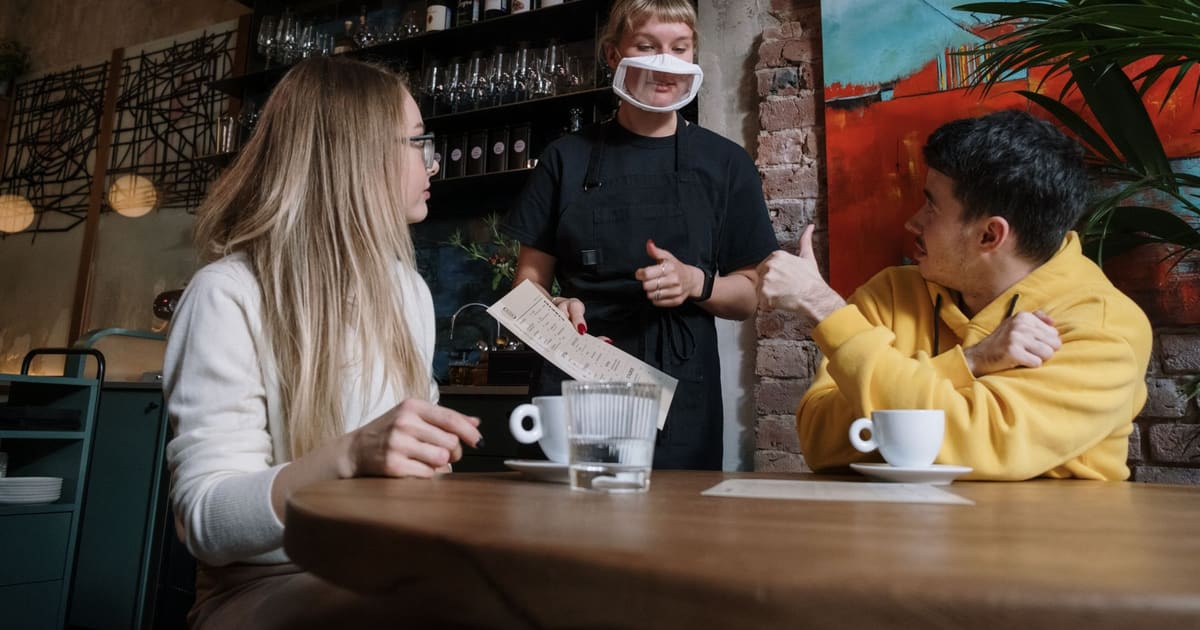
The cleanest way to split a restaurant bill is to ask for separate checks the moment you sit down, before you have ordered anything. Asking at that stage takes ten seconds and requires no extra work from your server. Waiting until after the meal is served -- or after the check has already been printed -- creates a more involved process and is the source of most bill-splitting friction.
The Easiest Way to Split a Restaurant Check
When you are shown to your table, simply say to your server: "We will be on separate checks tonight." That is it. Your server enters each person's orders separately from the beginning, and the checks are ready to run as individual tabs when the meal ends. No math, no Venmo, no awkward renegotiation at the table.
This works best when everyone knows in advance that they are paying separately. If the group is gathering for a dinner where one person is the clear host, the expectation is typically that the host pays and this conversation does not happen.
The approach changes when there are more than six or seven people at the table. Large groups often find that a hybrid approach -- one or two people pay the single check and the rest settle via apps -- is faster than eight individual card transactions during a busy service. See our guide on large-party restaurant tipping for how tipping and auto-gratuity work at larger group sizes.
When to Ask for Separate Checks (and How to Ask)
Timing is everything. The hierarchy from best to least desirable:
- When you are seated, before ordering. The server enters each order under separate tabs from the start. Zero friction.
- After ordering but before food arrives. Possible, but requires the server to adjust the ticket entries. Some POS systems handle this easily; others do not. Ask politely and be prepared for a brief delay.
- After the meal, before the check is printed. The server can still separate items by seat in most systems, though it takes longer.
- After the check has been printed on a single ticket. This requires reopening the check. Avoid this if you can. It is not impossible, but it creates extra work during a busy service.
The language is easy: "Could we have separate checks?" or "Would it be possible to put us on separate tabs?" Both are completely normal requests. You do not need to explain or apologize.
How to Split the Bill Evenly vs. Itemized
Two methods dominate group bill splitting, and each works best in different situations.
Even split. Everyone pays the same amount regardless of what they ordered. This is fast, simple, and avoids any feeling of accounting for individual choices. It works well when the group ordered a similar range of dishes or when everyone is comfortable absorbing minor differences. The math is: (total bill including tax and tip) divided by the number of people.
Itemized split. Each person pays for what they specifically ordered, plus a proportional share of tax and tip. This is more accurate but requires more time and attention. It is the right approach when there are meaningful spending differences at the table -- one person ordered a $70 bottle of wine, others drank water; one person had an entree and dessert, another had just a salad.
A useful rule of thumb: if the highest and lowest individual bill amounts differ by more than about $20, an even split benefits one party noticeably at the expense of another. At that point, an itemized approach or a voluntary adjustment from the higher spender is more equitable.
What to Do When One Person Ordered Much More
This is the most socially charged bill-splitting scenario. If you ordered a $65 steak and two cocktails and the rest of the table had pasta and sparkling water, proposing an even split puts a real cost on others without their agreement.
The right move: offer to pay your actual share before anyone has to ask. "I should throw in more since I had the wine" is easy to say and universally appreciated. The alternative -- staying quiet and accepting an even split that benefits you -- creates resentment that outlasts the meal.
If someone else at the table ordered significantly more and does not acknowledge it, you have two reasonable options: suggest an itemized split directly ("Let us just each cover our own") or let it go and factor it in to the next dining occasion. Calling it out explicitly is generally worth it only if the dollar difference is substantial.
How Many Cards Can a Restaurant Reasonably Split?
Most modern point-of-sale systems can run separate checks on as many cards as the group requires, but there is a practical limit on the server's time. Running six individual cards during a busy dinner service takes four to eight minutes. During peak hours, this is a genuine burden.
A reasonable limit for card splitting at the table is four to six individual cards. Above that, the practical approach is to consolidate: two or three people put in cards and the rest settle via payment apps. This gets everyone out faster and reduces the burden on the server during a busy shift.
Note
When the bill is split across multiple cards, confirm that tax and tip have been calculated correctly before the cards are run. A common mistake is for one person to pay the full bill and then accept reimbursements that exclude the proportional tip. Everyone's share of the tip should reflect the full service amount, not just the food subtotal.
Using Venmo and Payment Apps to Settle Later
Payment apps have made the "pay one card and settle later" approach simpler and more reliable than it used to be. If the group decides one person pays the check and others transfer their share, the flow is:
- One person pays the full bill.
- That person immediately requests payment from each other guest via Venmo, Cash App, or Zelle with a specific dollar amount and a note (the restaurant name and date).
- Others pay promptly -- ideally before leaving the restaurant or within 24 hours.
Splitwise is useful for recurring groups (work lunches, regular dinners with the same friends) because it tracks balances over time and handles partial settlements across multiple meals. It is overkill for a one-off dinner.
The failure mode with apps is delay. Requesting settlement immediately, while everyone is still at the table, dramatically improves follow-through. Leaving it until the next day introduces the possibility of forgotten amounts and awkward follow-ups.
Who Pays When There Is a Host or Special Occasion?
When the dinner has a clear host -- a birthday celebration where one person is treating the group, a work dinner where the company is paying, or an anniversary dinner hosted by a family member -- the bill does not get split. The host pays and that is the expectation.
At birthday dinners where the guest of honor is being treated by the group, the common arrangement is for everyone else to split the birthday person's share. The host role is distributed across the table. This is typically worked out before you arrive; if it has not been, someone at the table should propose it before the check arrives.
For work dinners, whoever is expensing the meal typically handles the check directly rather than splitting and submitting multiple receipts. If multiple people are expensing portions, sorting it via itemized split at the start is the cleanest approach.
Tip
The cleanest way to avoid all of this complexity on a special occasion is to call the restaurant ahead of time. Explain that you are hosting a celebration for a group, tell them roughly how many guests, and ask how they prefer to handle billing. Many restaurants are happy to keep the host's check separate from the group check from the start, making it seamless for everyone at the table.
Bill splitting has no universal etiquette rule beyond one: handle it before the check arrives, not after. Deciding in advance -- separate checks, even split, apps to follow -- removes the friction and lets the meal be the focus. For guidance on how tipping interacts with the bill split, see our guide on how much to tip at a restaurant, or run the numbers in seconds with the restaurant tip calculator. For events involving automatic gratuity on large groups, the large-party tipping guide covers how to avoid double-tipping when auto-grat is already applied.
Frequently asked questions
Is it rude to ask for separate checks at a restaurant?
No. Asking for separate checks when you are seated is completely standard and most servers prefer it to splitting at the end. The only time it creates friction is if you ask after the meal is already rung up on a single check, which requires the server to reopen and reprocess the entire transaction. Ask early and there is nothing awkward about it.
How many ways can a restaurant split a check?
Most point-of-sale systems allow a check to be split by seat (each person pays for what they ordered), split evenly among a defined number of cards, or allocated with specific dollar amounts to specific payment methods. The practical limit varies by restaurant and system, but most can accommodate four to six separate cards on a single check without issue.
Should tax and tip be split evenly or per-person?
If you are splitting the check evenly, tax and tip are part of the even split. If you are splitting itemized by what each person ordered, tax and tip are typically calculated proportionally based on each person's subtotal. The simplest approach: agree on the split method before the check arrives and use a calculator app to verify the math.
What is the right way to handle bill splitting on a date?
Conventions vary and depend on the relationship. On a first date, whoever extended the invitation typically offers to pay. If both people want to split, that is fine -- ask for two checks when you sit down. Splitting evenly mid-meal is also common. The awkwardness usually comes from not establishing expectations before the check arrives, not from the act of splitting.
What do you do if one person ordered alcohol and others did not?
The cleanest solution is separate checks from the start. If the group is splitting evenly and there is a large disparity in what people ordered, the person who ordered the expensive items -- wine, cocktails, higher-priced entrees -- should offer to cover their proportional share rather than benefiting from an even split. Raise it naturally before the check arrives.
Can you split a check after the meal has already been rung up?
You can, but it creates more work for the server and should be avoided. Most point-of-sale systems can reopen a check and reallocate items, but it takes time during a busy service. If you forgot to ask for separate checks at the start, the next best option is to pay the single check with one card and use Venmo, Cash App, or Splitwise to settle between yourselves.