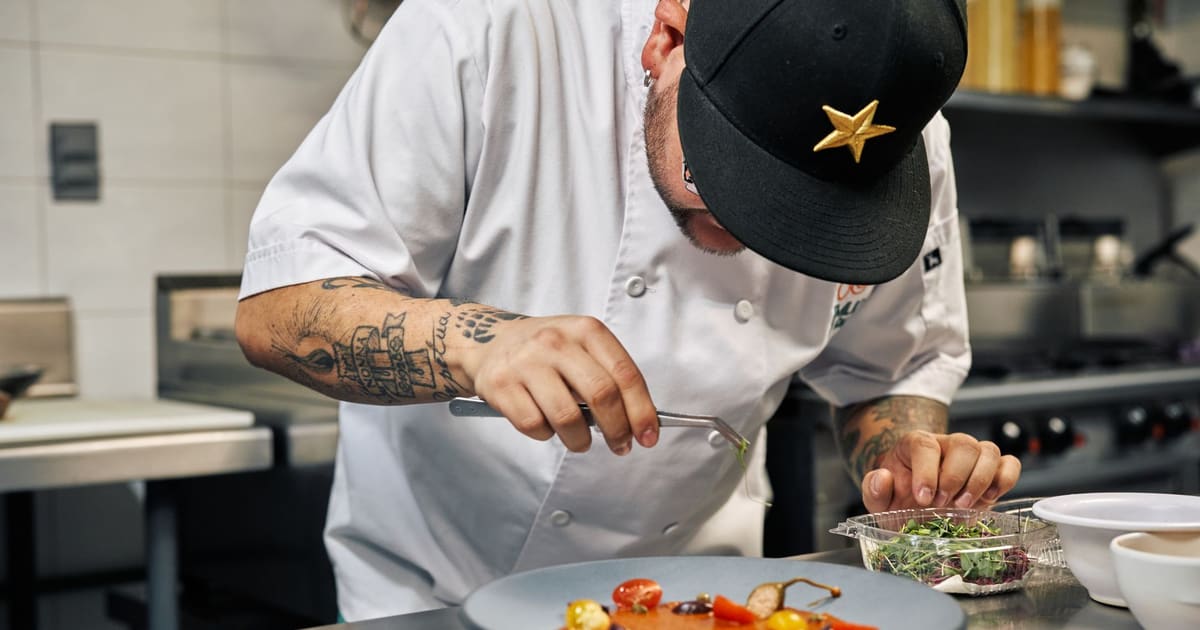
The most common restaurant service styles for diners are American plated service, buffet, family-style, and tableside French service. Each affects the pace of your meal, the level of formality, and the per-person cost for catered events. Knowing which style you are booking helps you set accurate expectations and ask the right questions before you commit.
What Are the Main Types of Restaurant Service?
Six service styles appear regularly in US restaurants and catering contexts. Three are common in everyday dining; three are mostly encountered in private events or fine dining.
American service is the standard in most US restaurants: food is plated individually in the kitchen and delivered to each guest by a server. This is what most people picture when they imagine dining out.
Buffet service places all food on a central table or station and guests walk up and serve themselves. Common at large events, hotel restaurants, and casual dining establishments.
Family-style service places shared dishes at the center of each table and guests help themselves from the common plates. Popular at Italian, Chinese, and Middle Eastern restaurants and at informal catered events.
French service involves tableside preparation or finishing - a server brings the dish on a cart or platter and completes it at the table. Common in fine dining establishments.
Russian service is similar to French but involves the server portioning food from a platter onto individual plates at the table, rather than plating in the kitchen. Rarely seen in the US outside of formal banquet settings.
Butler or passed service uses circulating servers carrying trays of passed items - canapes, small plates, or drinks - through a space where guests are standing. Standard for cocktail receptions and networking events.
American Service: The Most Common Style Explained
American plated service is the default in the vast majority of US restaurants. Food is prepared and portioned in the kitchen, then brought to each guest on an individual plate. The server delivers and clears.
This service style gives the kitchen precise control over portion size, plate presentation, and food temperature at delivery. From the diner's perspective, it requires no decisions beyond ordering - the meal arrives as the kitchen designed it.
For catered events, American plated service requires a higher server-to-guest ratio than buffet or family-style: industry standards typically call for one server per 10 to 15 guests for a formal plated dinner, compared to one per 25 to 30 for a buffet event. That staffing requirement is reflected in the per-person catering price.
The trade-off for diners and event hosts: plated service is more predictable and more formal, but it is less flexible for guests with varying appetites and generally costs more per person than buffet alternatives. See buffet vs. plated catering cost for a detailed price comparison.
Family-Style Dining: What It Means and When It Is Used
Family-style service places large shared platters at the center of the table. Guests pass the dishes and help themselves. There is no individual portioning in the kitchen.
This format originated in home dining and made its way into restaurants as a way to encourage sharing and create a communal atmosphere. Italian, Chinese, Korean, and Middle Eastern restaurants use it frequently because the cuisines naturally involve multiple dishes shared among the table.
For catered events, family-style has practical implications:
- Staffing: fewer servers are needed than for plated service because servers deliver large platters rather than individual plates
- Portion control: caterers typically increase total food quantities by 10 percent above per-person estimates to account for uneven self-serving
- Setup: requires enough table space for serving platters, which can crowd smaller round tables
Family-style works well for groups of 8 to 30 where the goal is a warm, social atmosphere. It is less practical for groups larger than 50 unless the event is specifically designed around it.
Buffet Service: Pros, Cons, and Price Implications
Buffet service concentrates all food at a central station and guests self-serve at their own pace. It is the most operationally efficient format for large groups and typically carries the lowest per-person cost.
Advantages for event planners:
- Requires the fewest servers (one per 30 to 40 guests for a managed buffet)
- Accommodates varied appetites - guests take what they want
- Dietary restrictions are easier to manage when labels are posted clearly at each dish
Disadvantages:
- Less formal atmosphere; not appropriate for black-tie or formal seated dinners
- Food holding temperature becomes a concern after the first hour
- Guests must leave the table to serve themselves, which interrupts conversation
For large corporate events, graduation parties, or any gathering where guest flow and efficiency matter more than formality, buffet service is typically the right choice. Our guide on how to plan catering for an event covers buffet planning in detail.
Good to know
For events over 100 guests, consider a double-sided buffet line - two identical setups facing each other - to reduce the time each guest spends waiting. A single-sided buffet for 150 people can produce line waits of 20 to 30 minutes, which creates bottlenecks and cold food problems.
French and Russian Tableside Service: What to Expect
French service moves part of the cooking or finishing process from the kitchen to the dining room. A server or captain brings a dish on a cart or platter - a whole roasted duck, a Caesar salad, a crepe suzette - and completes the preparation in front of the guest.
Russian service is similar but focuses on portioning: a server carries the finished dish on a large platter and uses serving spoons to transfer portions onto individual guest plates at the table.
Both styles are rare in American dining outside of established fine dining restaurants. You are most likely to encounter tableside preparation at restaurants with French, Continental, or classic American fine dining formats. The Gueridon cart - a small trolley the server wheels to your table - is a hallmark of this service tradition.
From a cost perspective, tableside service requires significantly more skilled labor per guest. Servers must be trained in the preparation steps, and service is slower and more deliberate. This is reflected in higher per-person costs and more formal pricing structures. See the private dining room cost guide for how private events with tableside service are typically quoted.
How Service Style Affects the Price of Your Meal or Catering
The service format is one of the most reliable predictors of per-person cost at a catered event. The comparison table above shows typical food-cost ranges by style, but the real cost difference comes from the staffing side.
Labor can represent 30 to 40 percent of a full-service catering quote. A plated dinner for 50 guests may require four to five servers; the same guest count for a buffet might need two. At $25 to $40 per server-hour including overtime, the staffing difference across a four-hour event can reach $400 to $600 - material enough to affect your choice of service style.
Tip
When comparing catering quotes, ask each vendor to break out food cost separately from labor and staffing fees. A lower per-person food price can be offset by a higher staffing charge. The total all-in cost is the number that matters.
How to Choose the Right Service Style for Your Event
The right service format depends on four variables: guest count, formality level, budget per person, and the type of event.
| Event type | Recommended service style |
|---|---|
| Corporate lunch under 30 guests | Buffet or family-style |
| Wedding reception 50+ guests | Plated or stations |
| Cocktail reception (all standing) | Butler/passed service |
| Birthday dinner 10-20 guests | Family-style or plated |
| Large gala or charity event | Buffet or stations |
| Private fine dining experience | Plated or tableside |
Formality is the clearest differentiator. If guests are in formal attire for a seated dinner, buffet service reads as a mismatch. If the event is a networking lunch where guests will be circulating, a buffet or passed service is the right fit.
Guest count is the secondary factor. For events under 20 people, the service style difference in cost is modest. For events over 75 guests, the staffing savings from buffet over plated service become significant.
Key takeaway
Ask any caterer or restaurant coordinator which service style is included in their quote. "Full-service catering" can mean plated, buffet, or family-style depending on the vendor. Get the format confirmed in writing alongside the per-person price, because the staffing cost - which changes significantly between styles - directly affects your total bill.
Understanding restaurant service styles helps you evaluate quotes accurately and set the right expectations for guests. When in doubt, ask the caterer or restaurant coordinator to describe exactly how food will be delivered to guests and how many staff will be on-site. That conversation will clarify the real cost structure faster than any price per person figure on its own.
For a direct cost breakdown between buffet and plated formats, see buffet vs. plated catering cost.
Frequently asked questions
What is the difference between family-style and plated dining?
Family-style service places shared dishes at the center of the table so guests serve themselves. Plated service means each guest receives an individually portioned dish, typically pre-plated in the kitchen. Family-style is more casual and works well for groups; plated service is standard at formal dinners and most catered events.
What does tableside service mean at a fine dining restaurant?
Tableside service means a staff member completes part of the dish preparation or presentation at your table - carving a roast, tossing a Caesar salad, or flambeing a dessert. It is a theatrical element of French service used to elevate the dining experience, and it requires more staff time, which is reflected in the cost.
Is family-style cheaper than plated service for a catered event?
Family-style catering is often 10 to 20 percent less expensive than plated service because it requires fewer servers and no individual plating labor. Portion control is harder with shared dishes, so caterers sometimes increase the total food order by 10 percent to prevent shortfalls, which can offset some of the savings.
What service style works best for a large group?
Buffet and family-style service both work well for large groups because they reduce the server-to-guest ratio needed. For groups over 75, buffet service is typically the most efficient option. For seated groups of 20 to 60 where you want a more social atmosphere, family-style is a good middle ground between buffet and full plated service.
What is butler-style service at a catered event?
Butler-style service means servers circulate through the event space carrying trays of passed appetizers, canapes, or small plates, and guests choose items from the tray as servers pass by. It is common at cocktail receptions and does not require a seated setup. It works well for networking events where guests are standing and moving around.
Can I request a specific service style when booking a private dining room?
Yes, but the restaurant's private dining format may limit your options. Most restaurant private rooms default to plated or prix fixe service because it allows accurate food-and-beverage minimum planning. Family-style or shared-plate formats are available at some restaurants but should be discussed with the event coordinator before booking.